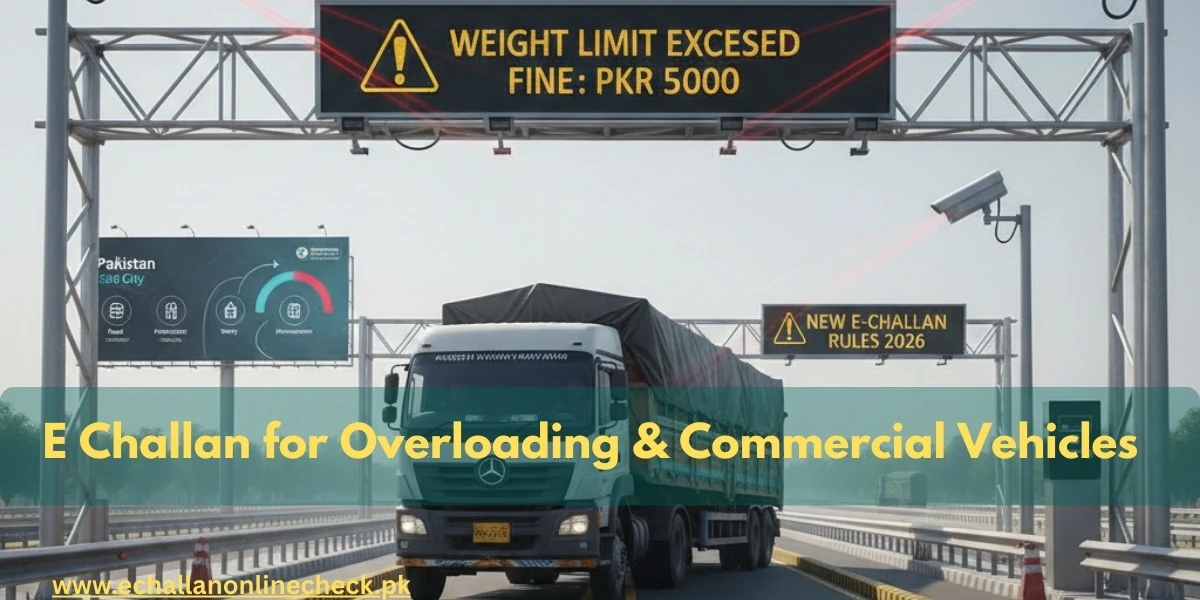
E-Challan for Overloading & Commercial Vehicles New Penalties in 2026
In 2026, the Pakistan transport sector is undergoing a massive digital transformation. To protect our national infrastructure and save lives, the government has introduced a much stricter e-challan for overloading and commercial vehicle violations. These rules are no longer just about small fines; they are designed to stop the “overloading culture” that destroys roads and causes fatal accidents on highways.
If you own or drive a truck, bus, or trailer, understanding these new commercial vehicle penalties 2026 is vital to keeping your business running smoothly and avoiding heavy financial losses. Check E Challan in Karachi also by plate number.
Why the Rules Changed in 2026
The decision to increase penalties wasn’t just about collecting revenue. Several critical factors led to this crackdown:
- Road Infrastructure Protection: Overloaded vehicles reduce the lifespan of our asphalt roads and bridges by nearly 50%.
- Safety First: A heavy truck is much harder to brake in an emergency. Stricter fines mean fewer accidents.
- Environmental Impact: Overloaded engines work harder, burn more fuel, and emit toxic smoke, contributing to the smog issues in Punjab and Sindh.
- Fair Business: It ensures that honest transporters who follow weight limits aren’t outcompeted by those who break the law.
New Penalty Rates for 2026
The government has moved away from flat fines to a percentage-based system. The more you overload, the more you pay. Here is the breakdown of what you can expect if you are caught by a Safe City camera or a weigh station.
Read Also: How to Get SMS Alert for E- Challan Instantly.
Fines for Goods Vehicles (Trucks & Trailers)
- Up to 10% Overload: For minor mistakes, the fine starts at PKR 10,000.
- 10% to 25% Overload: This is considered a serious violation, carrying a fine of PKR 20,000.
- Above 25% Overload: This is a heavy violation with a massive fine of PKR 50,000.
- Repeat Offenders: If you are caught for the same violation twice, the fine jumps to PKR 100,000, and the vehicle can be detained (locked up) by the police.
Fines for Passenger Vehicles (Buses & Vans)
- Extra Passengers: Carrying more people than the registered seating capacity results in a PKR 5,000 fine.
- Standing Passengers: If passengers are found standing in the aisle of a bus, the fine is PKR 10,000.
- Illegal Seat Modifications: Removing legroom to add more seats will cost you PKR 20,000.
Axle Load and Weight Limit Rules
In 2026, authorities are focusing heavily on “Axle Load.” Even if your total weight is fine, if one axle is carrying too much, it ruins the road.
- Axle Violation: You will be fined PKR 15,000 per axle found over the limit.
- Bridge Limits: Crossing a bridge with a weight limit while being over that limit carries a direct PKR 30,000 fine.
- Immediate Unloading: In most cases, the vehicle will not be allowed to move until the extra weight is unloaded on the spot.
Fitness and Permit Penalties
A commercial vehicle must be “fit” to be on the road. The psca e challan online check now also tracks your documentation status.
- Expired Fitness Certificate: Driving a vehicle without a valid fitness check will cost PKR 7,500.
- No Route Permit: If you are found driving on a route not mentioned in your permit, the fine is PKR 10,000.
- No Commercial Plate: Using private plates for commercial work results in a PKR 5,000 fine.
How Technology Catches Violators
The days of dodging a traffic warden are over. In 2026, the system uses:
- Electronic Weighbridges: Sensors built into the road that weigh your truck while it is moving.
- AI Cameras: Intelligent cameras that can detect if a bus is overcrowded or if a truck is sagging under too much weight.
- ANPR Technology: Automatic Number Plate Recognition links your violation to your psca e challan record instantly.
Tips for Transporters to Stay Compliant
To avoid these heavy fines and keep your route permits active, follow these best practices:
- Weigh Before You Leave: Always use a certified private weighbridge before starting your journey.
- Check Documents Weekly: Use a vehicle registration app to ensure your fitness and permits aren’t expiring.
- Train Your Drivers: Make sure your drivers understand that the cost of a fine is much higher than the profit from an extra ton of load.
- Regular Maintenance: Keep your brakes and suspension in top shape to pass the fitness tests easily.
Conclusion
The E-Challan for Overloading & Commercial Vehicles in 2026 represents a major shift toward digital governance. While the higher fines may seem difficult for the transport industry, they are essential for creating a safer and more sustainable road network in Pakistan. By following the rules and staying updated through an e challan check, transporters can avoid legal trouble and contribute to a safer future for everyone on the road.
Frequently Asked Questions (FAQs)
1. Can my route permit be cancelled for overloading?
Yes, repeated violations for overloading or carrying extra passengers can lead to the permanent suspension of your route permit.
2. How do I do a psca e challan online check for my truck?
Visit the official PSCA portal, enter your commercial registration number, and provide the owner’s CNIC to see all pending tickets.
3. What happens if I don’t pay an overloading fine?
The vehicle registration will be blocked in the Excise system, meaning you cannot pay token taxes or transfer the vehicle until the fine is cleared.
4. Are the fines different for oil tankers?
Oil tankers must follow strict safety and weight protocols. While the base fines are similar, any leakage or safety violation can result in much higher environmental penalties.